
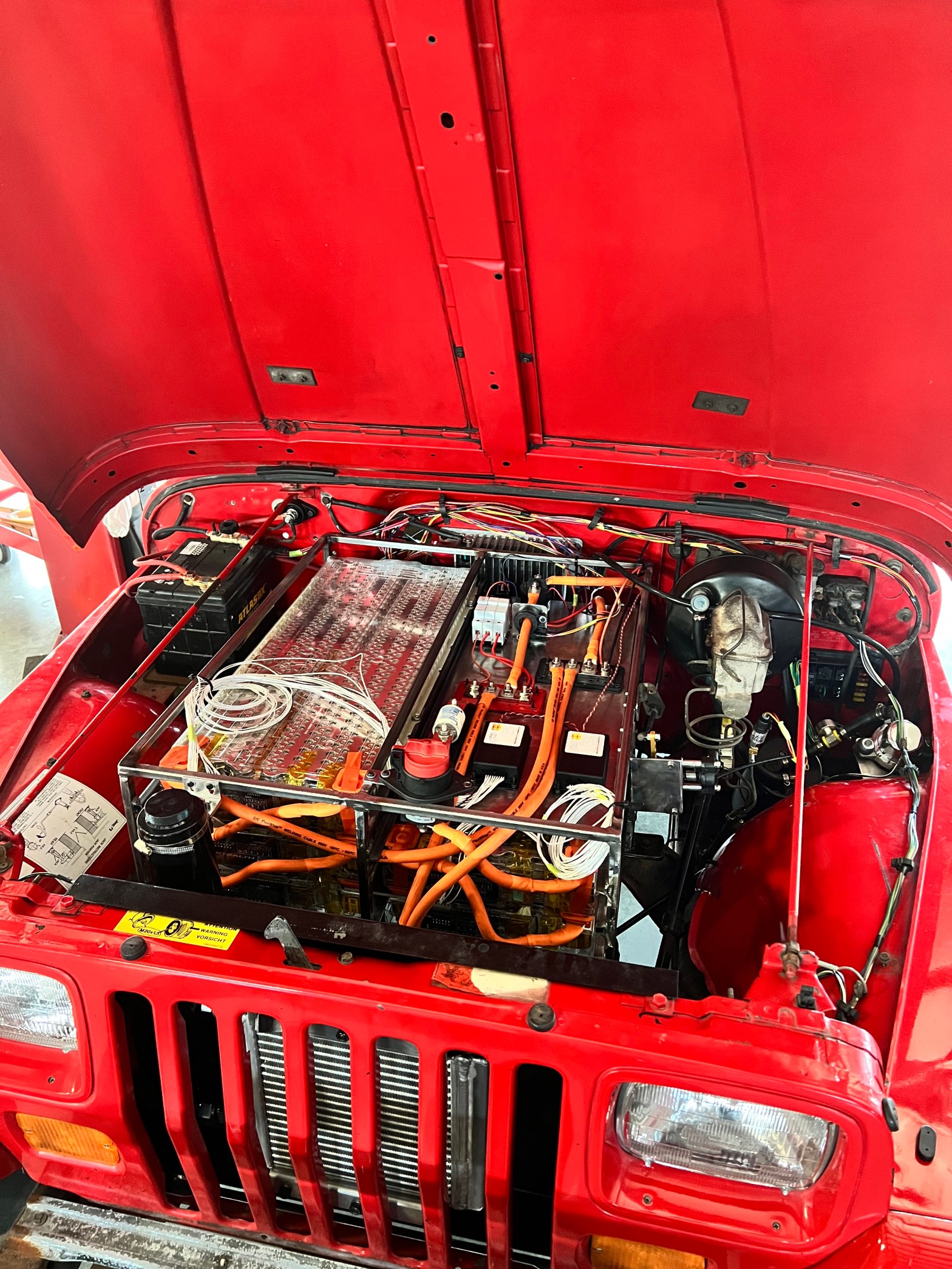
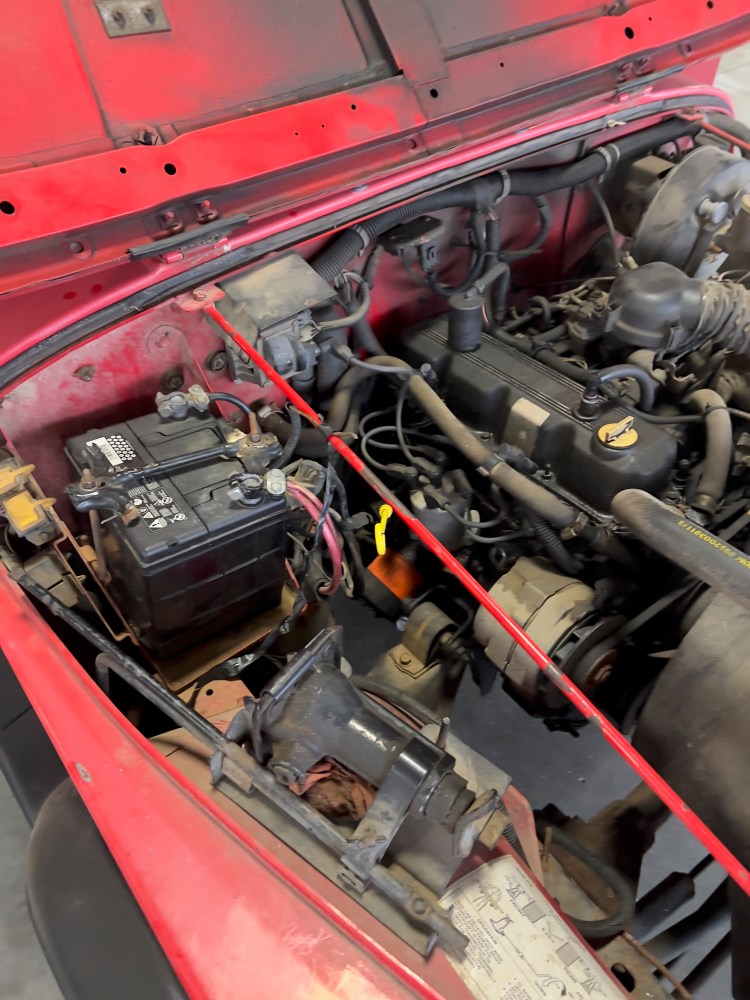
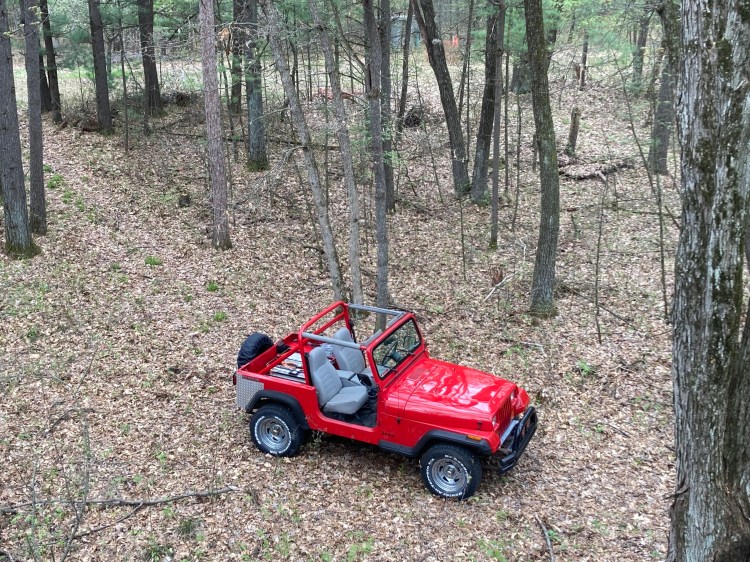
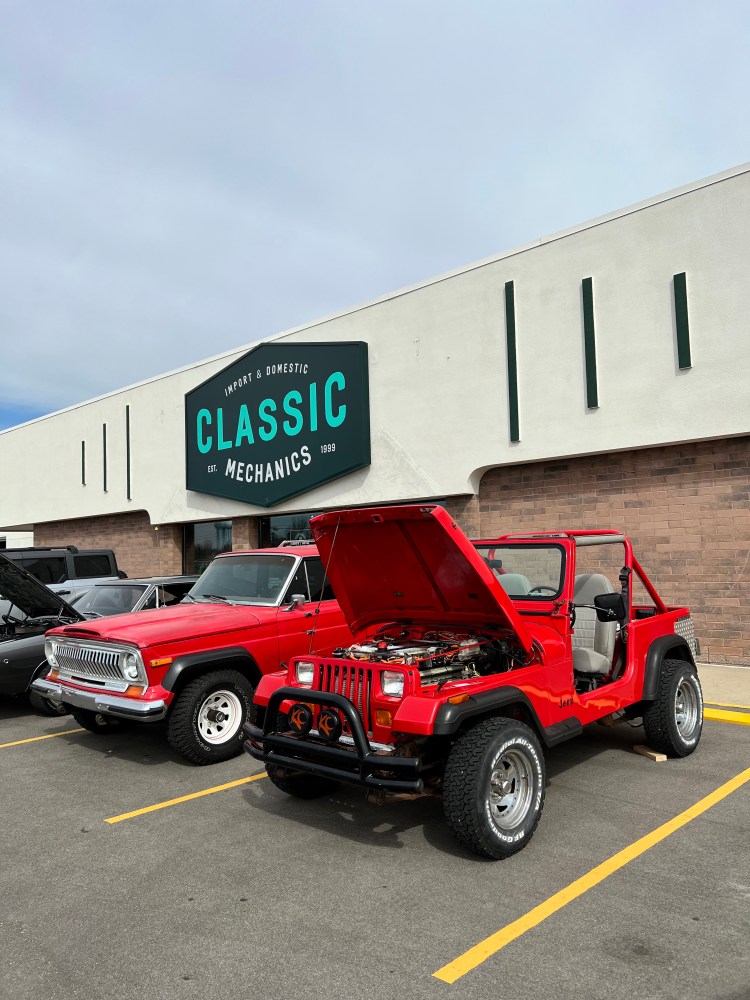
The 1989 Jeep Wrangler was our first official EV conversion here at Midwest EV and came in with a 2.5L 4 cylinder linked to an AX5 5-Speed transmission. With an engine knock upon arrival, Drew was able to get it running, but it didn’t run very well. Thankfully the intention from the beginning was to convert it. We decided to take this project on as an internal company project to get some experience under our belt. We also wanted an in-house project done to show our capabilities and to use at our local events to get our name out.
“I learned a lot during this project. Fundamentally, I knew what components were needed to be included in an EV conversion, but there were lots of little challenges to work through,” said Drew.

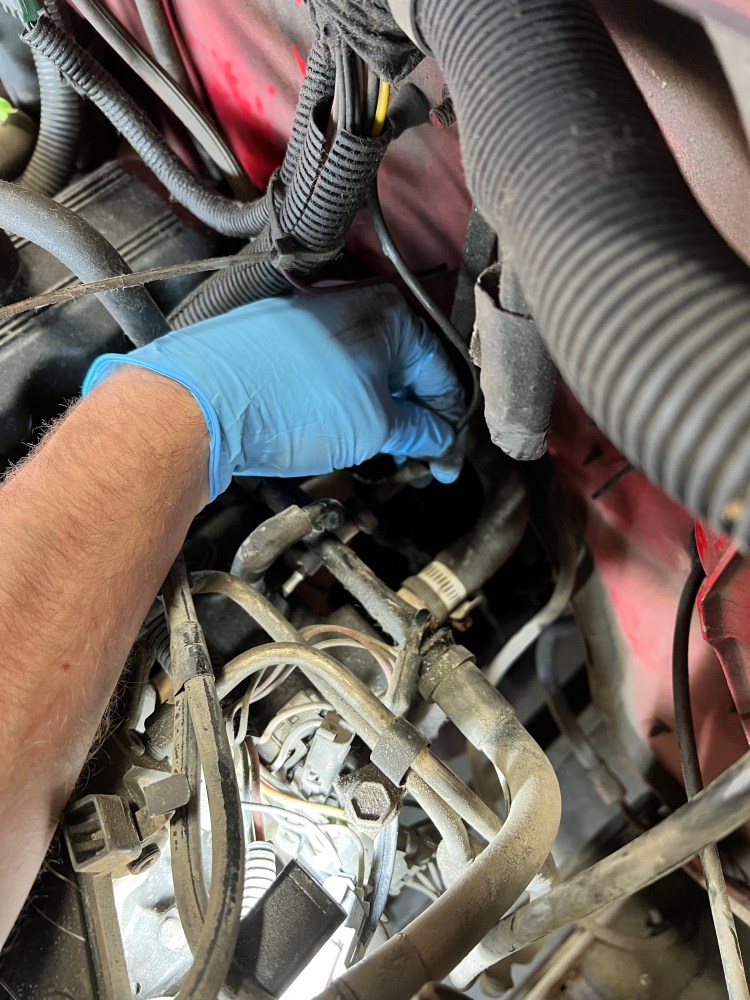

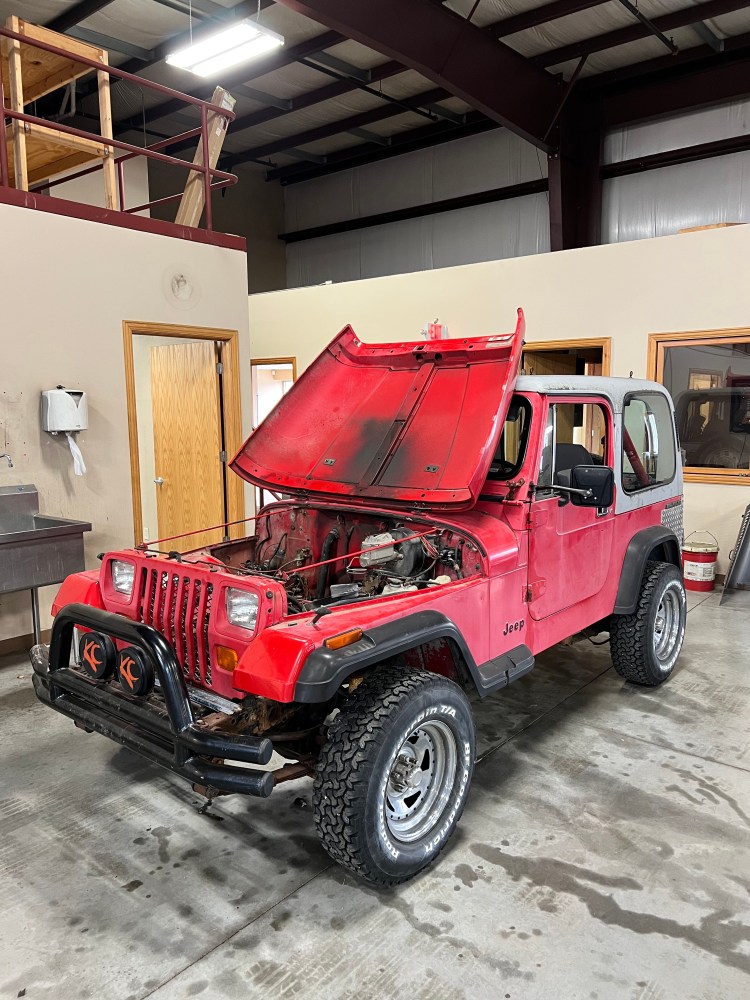
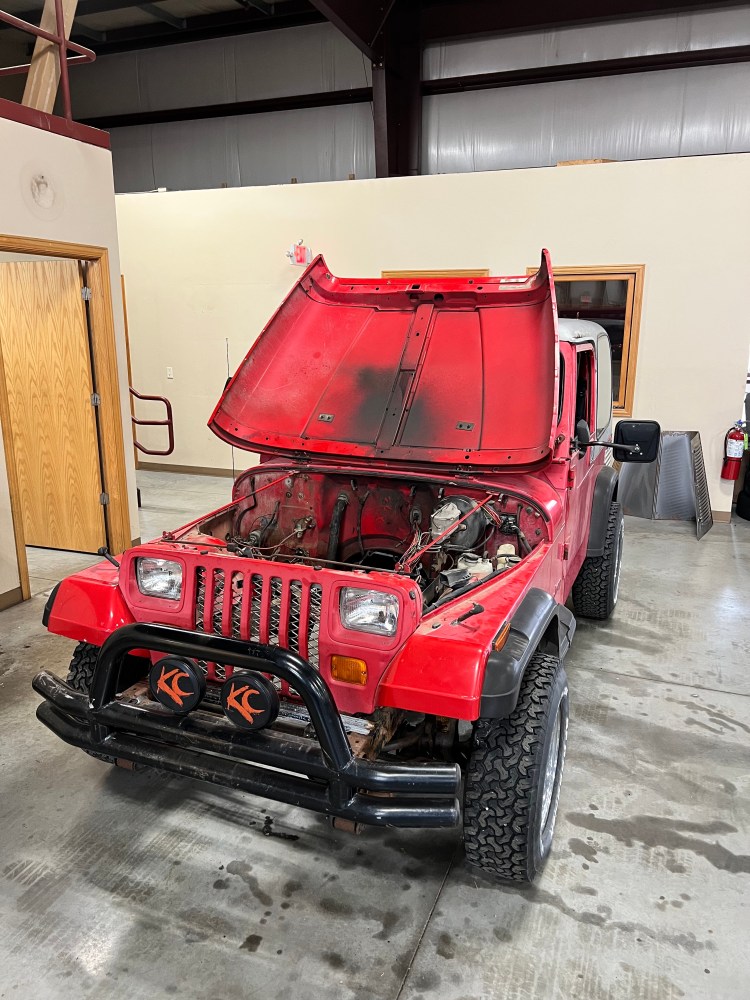

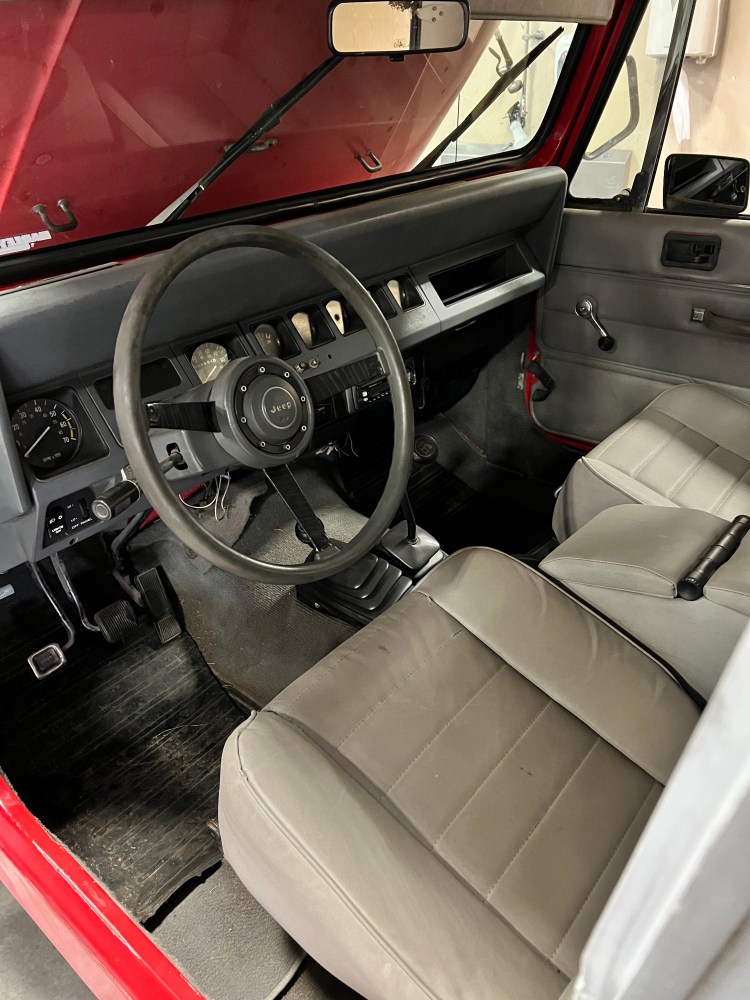

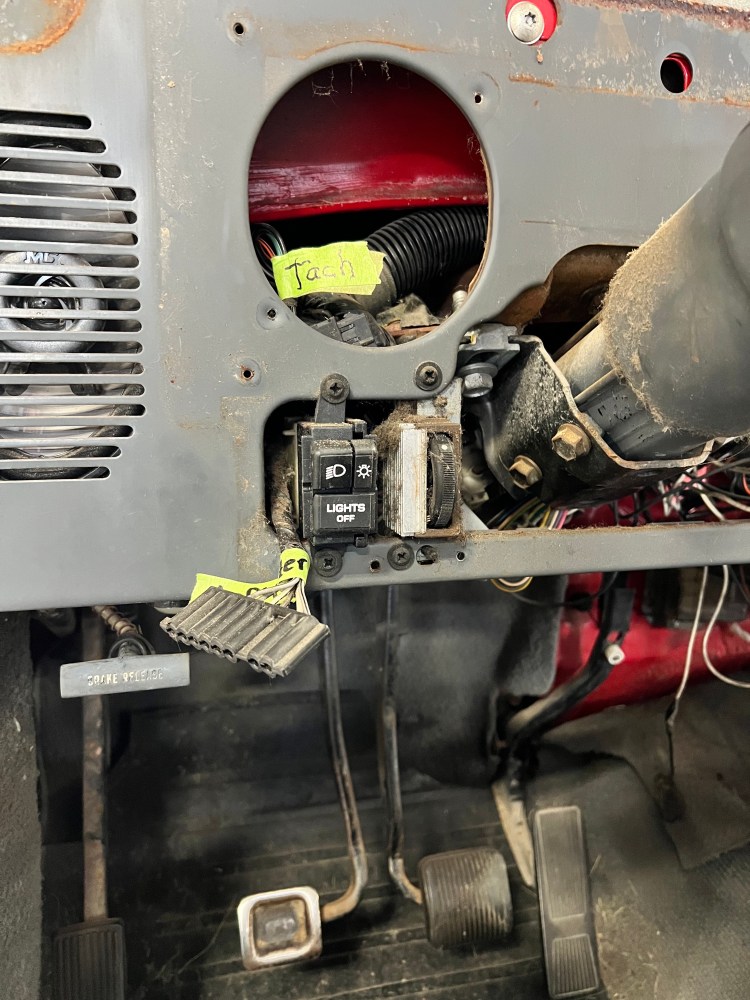
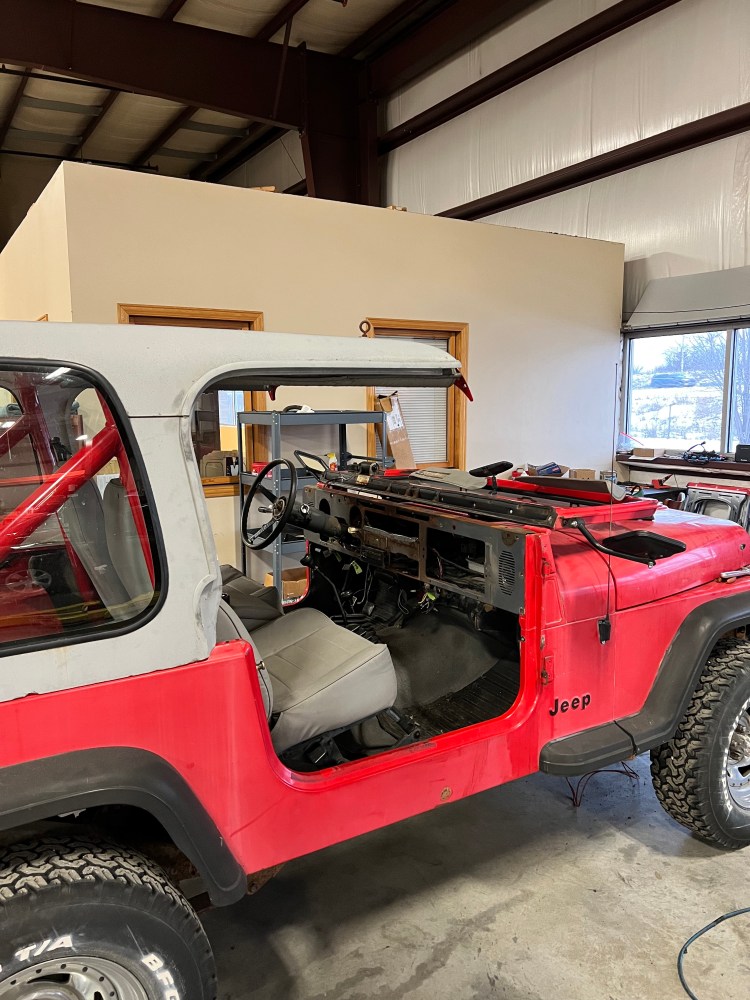
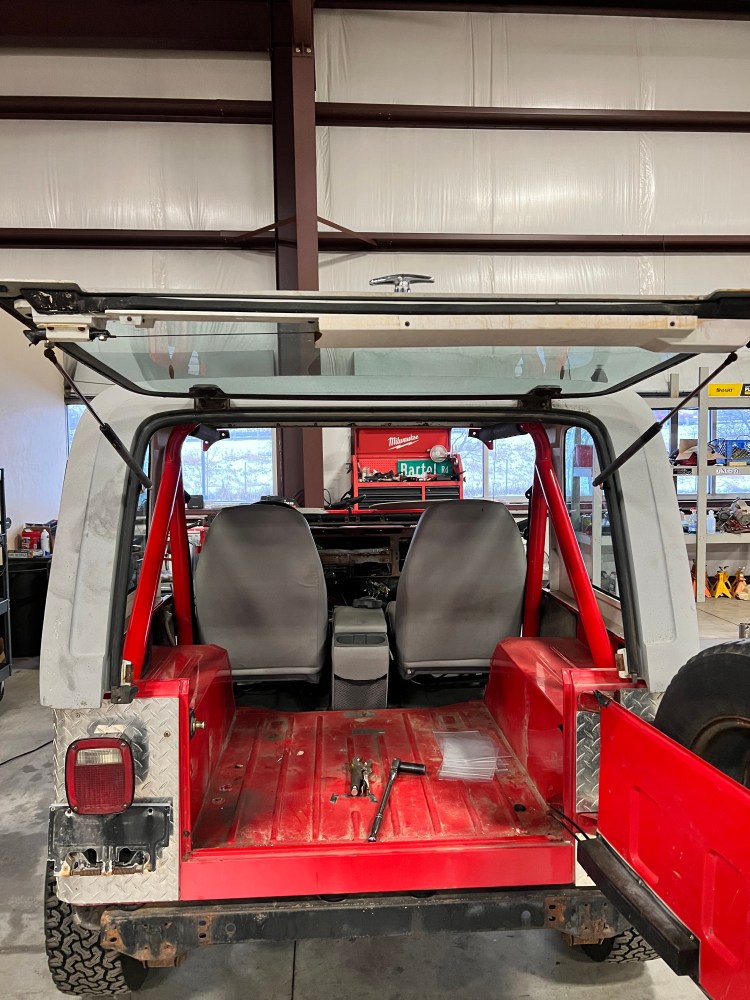
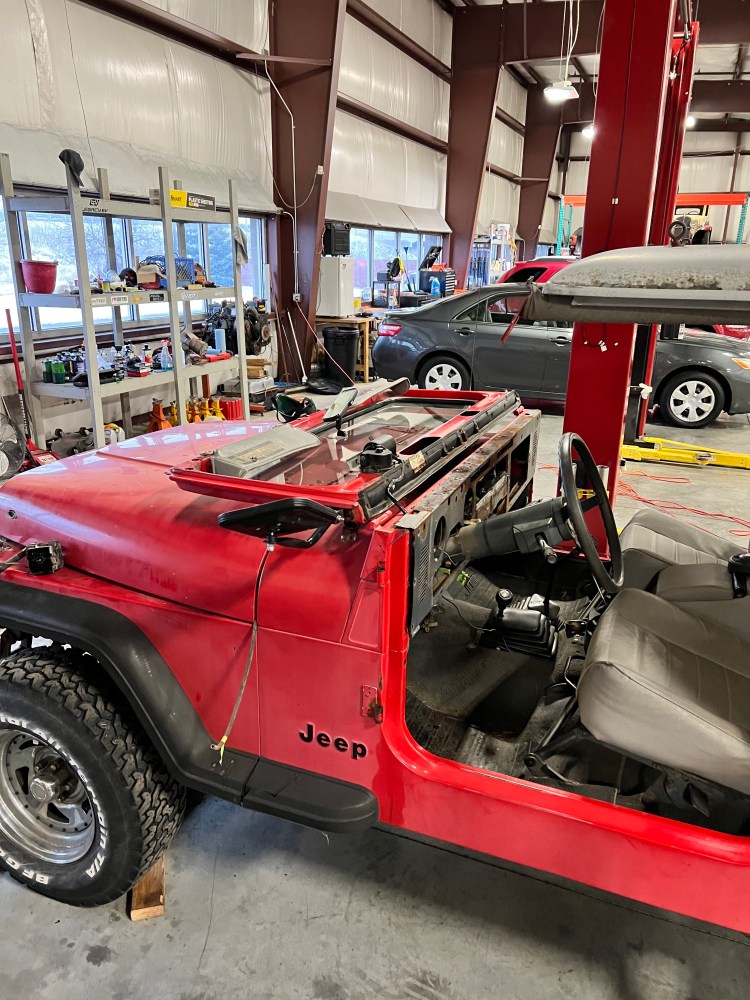
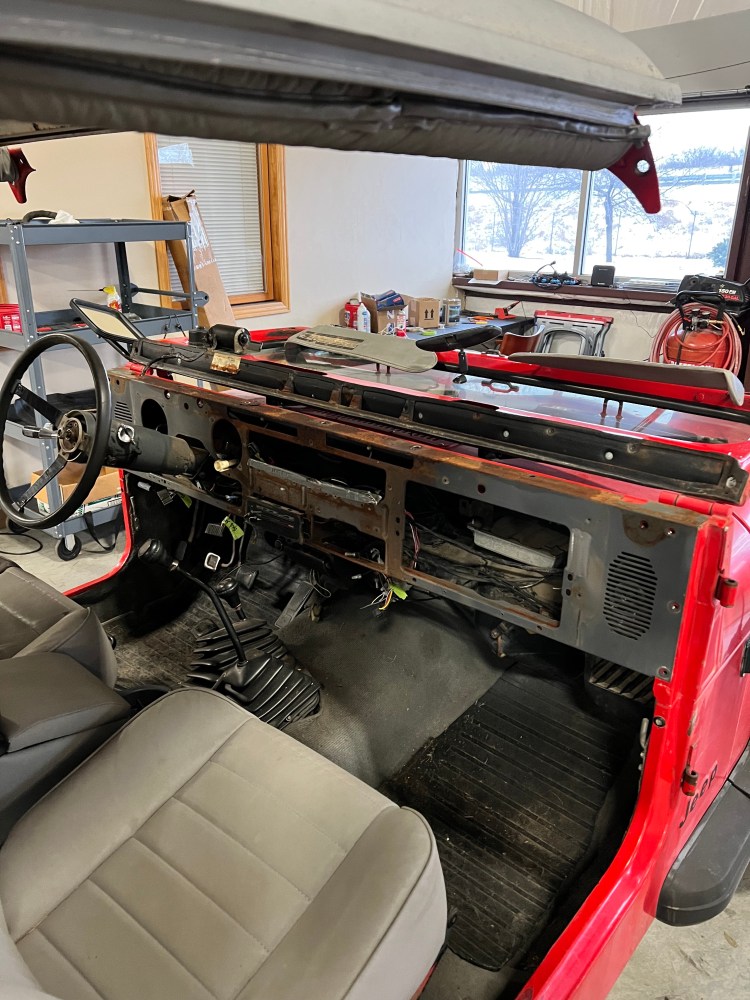
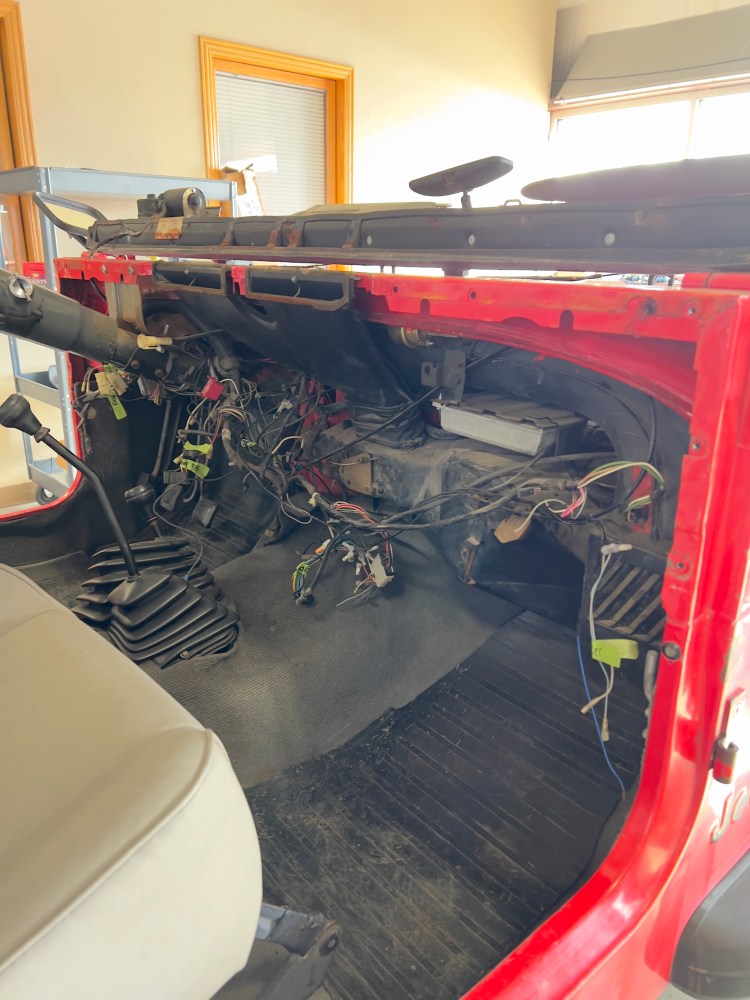
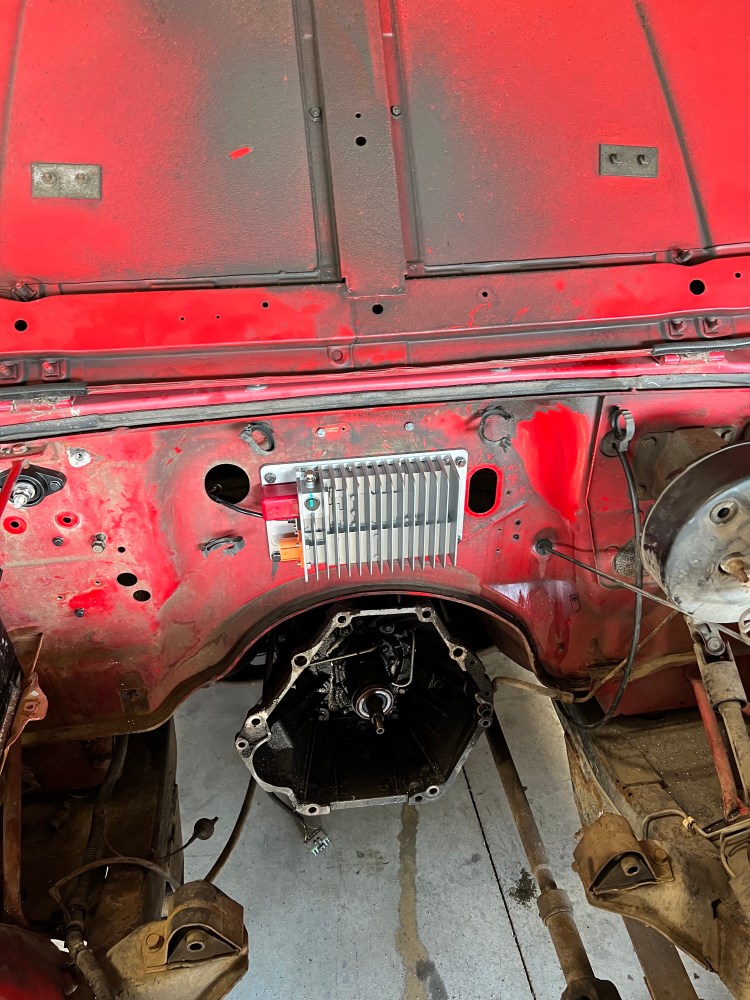


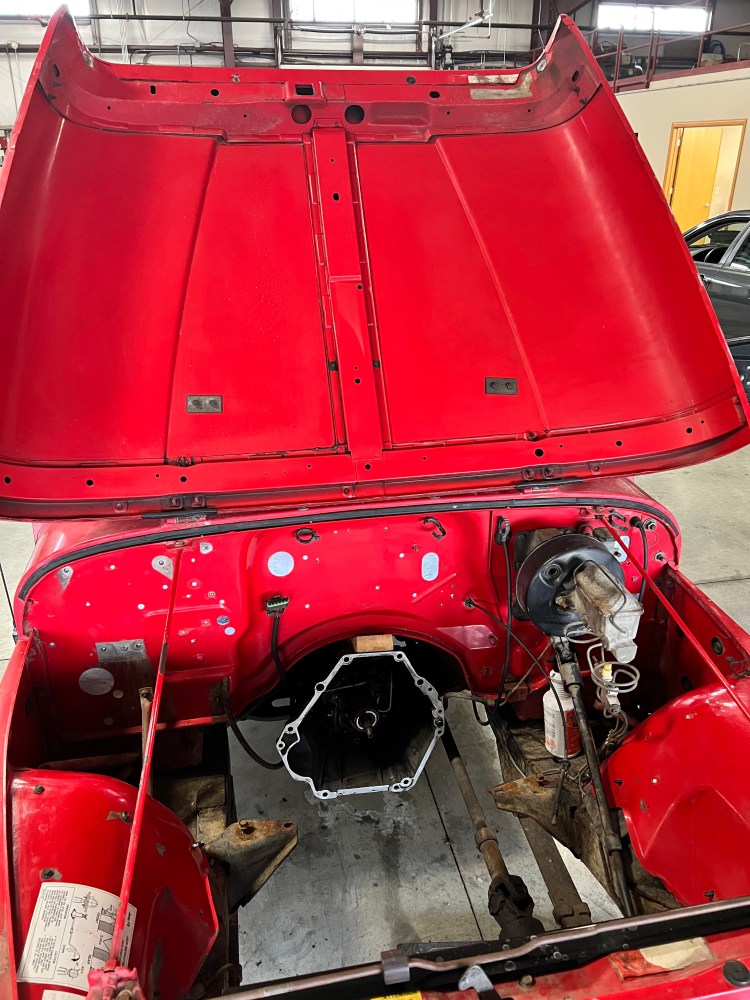
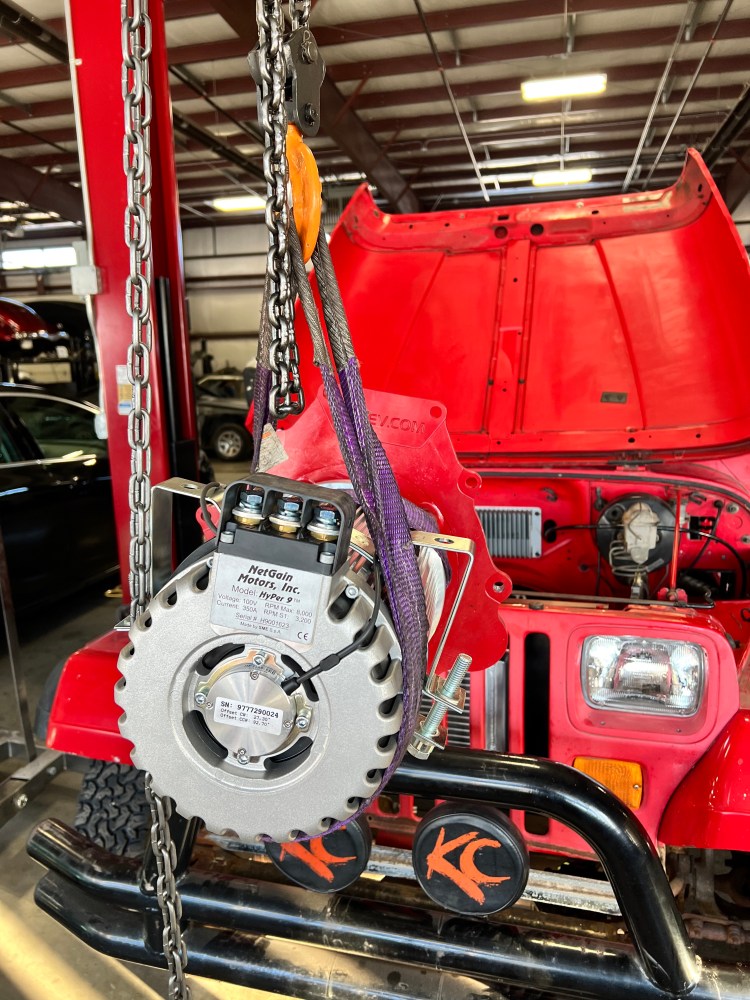
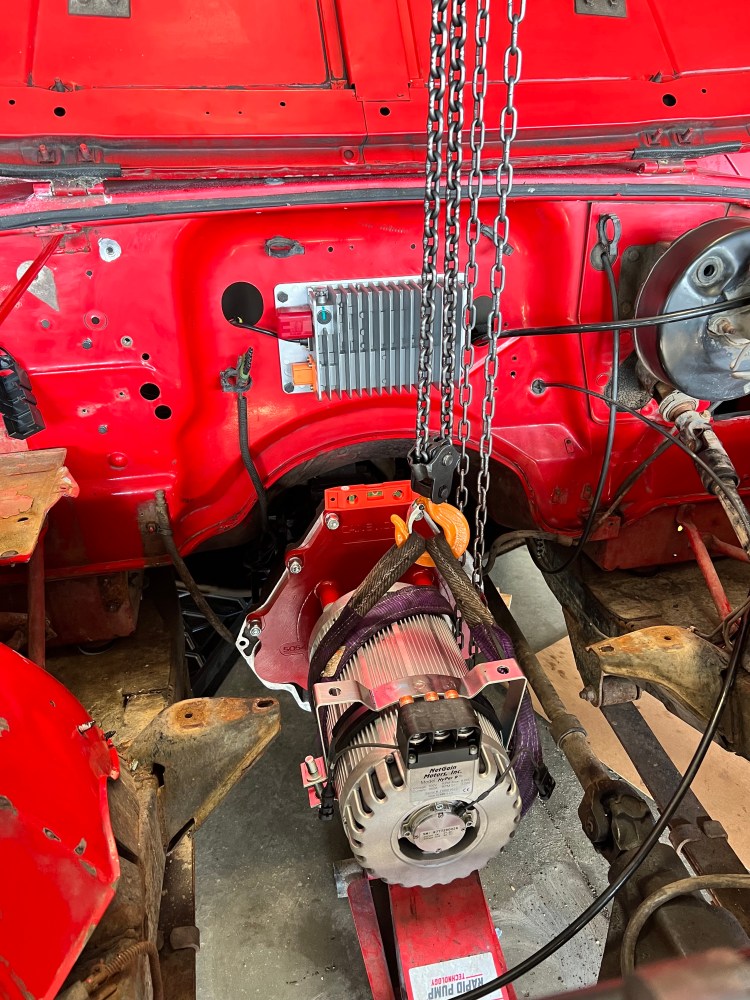
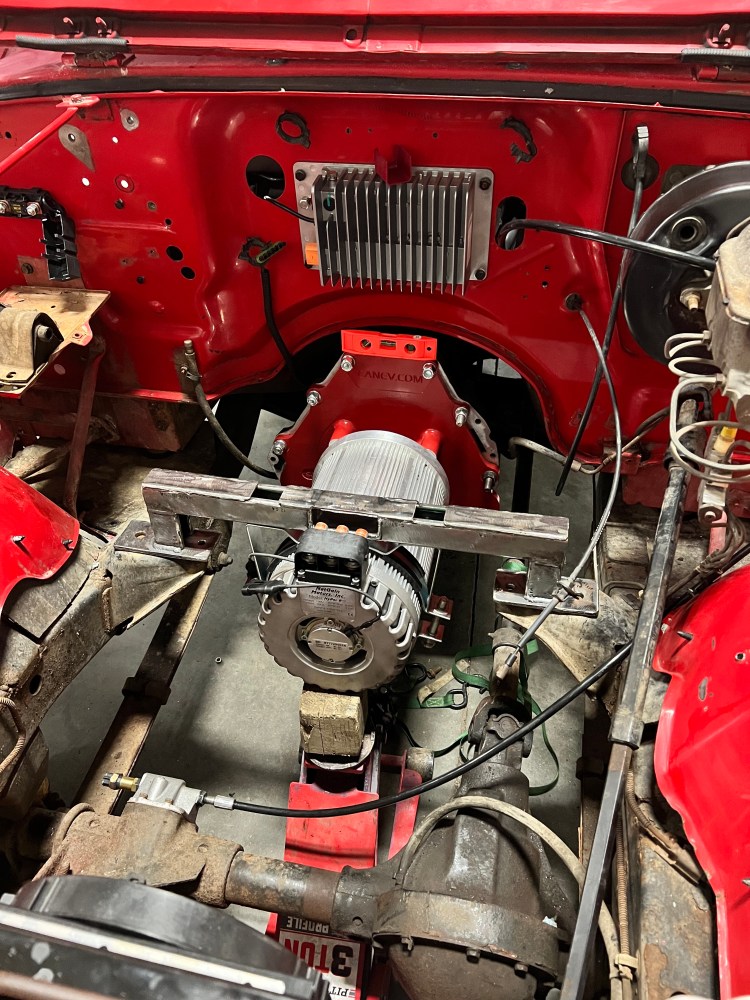

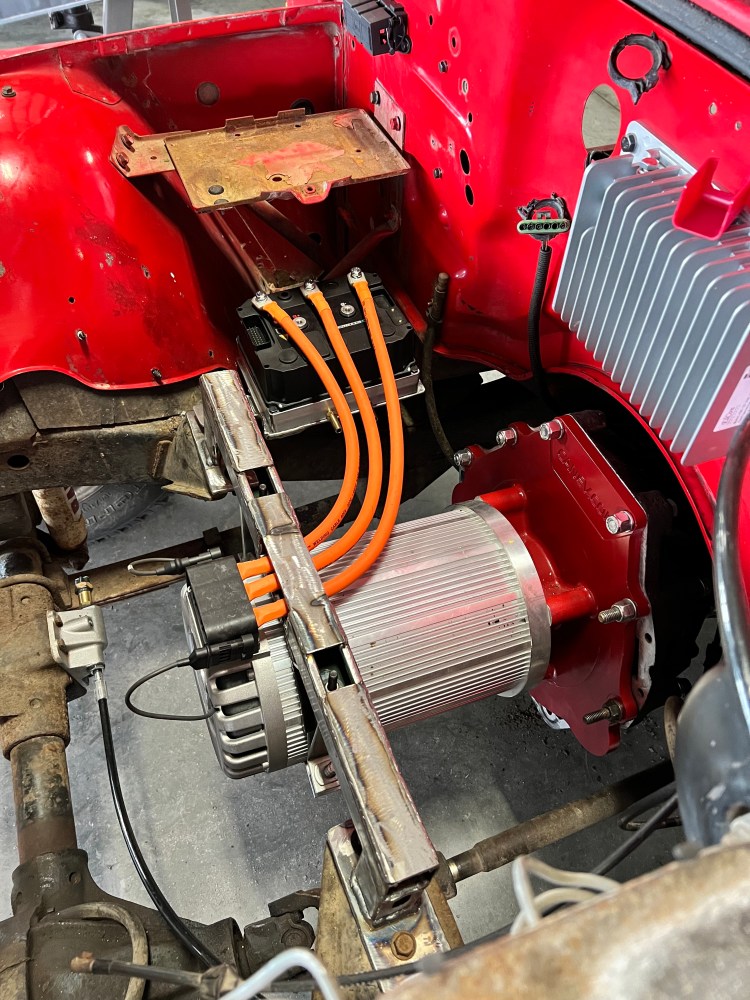
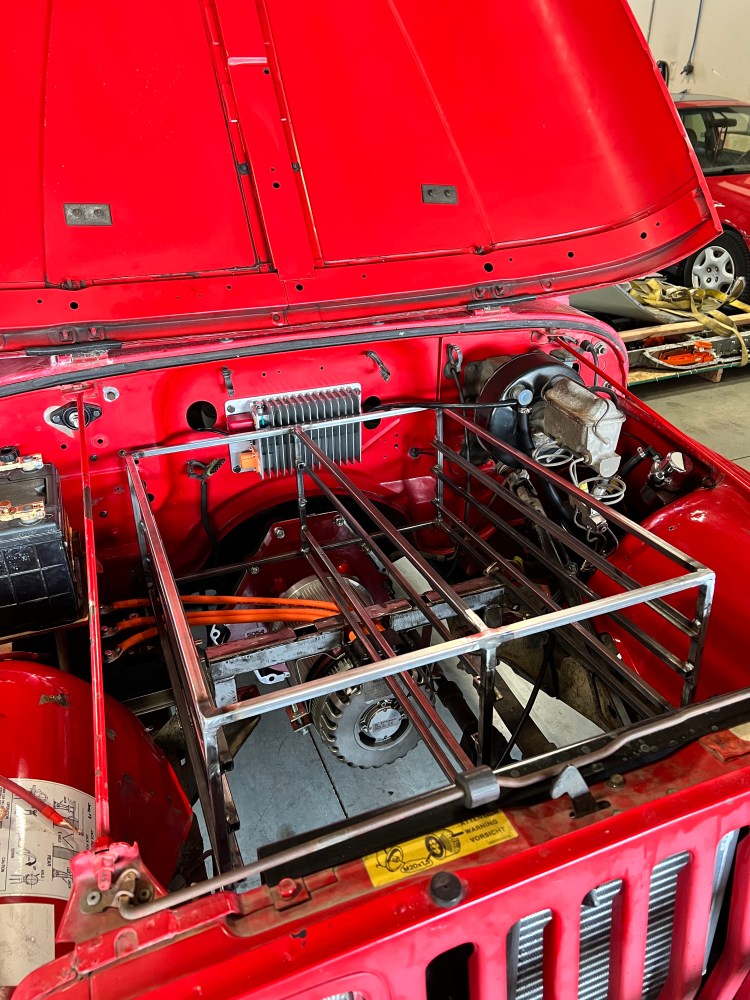

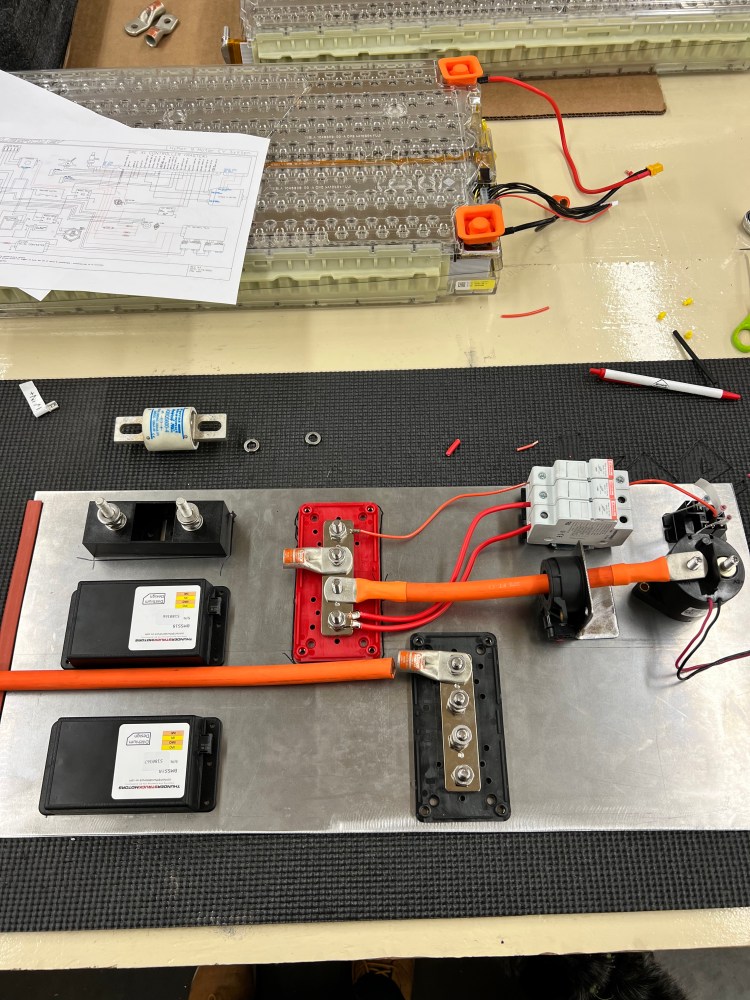
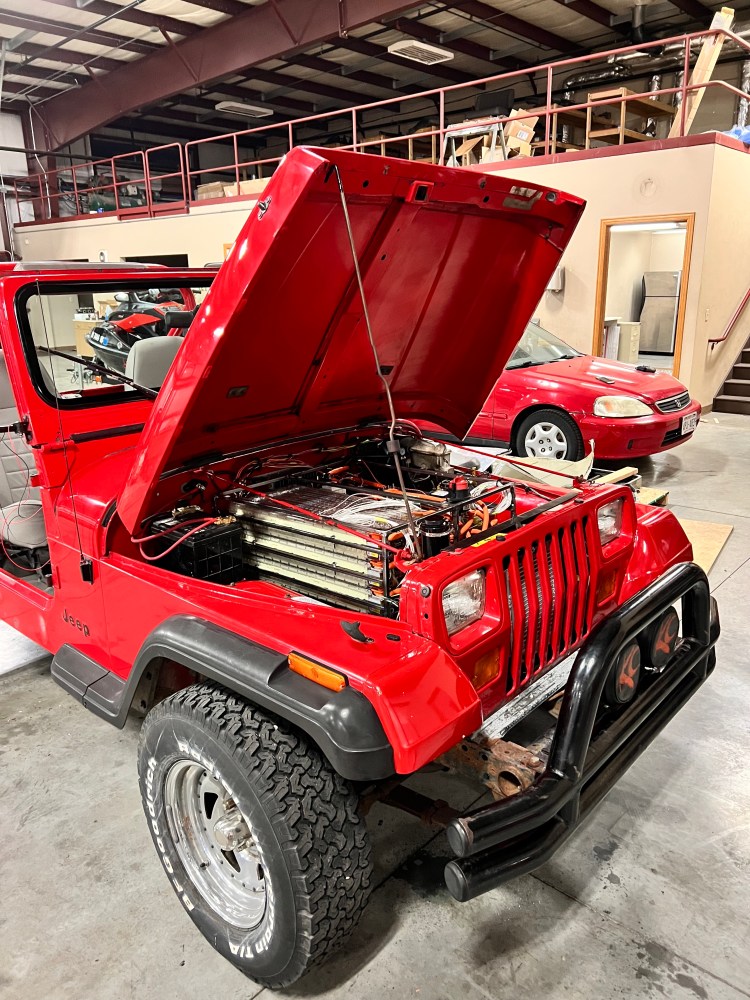
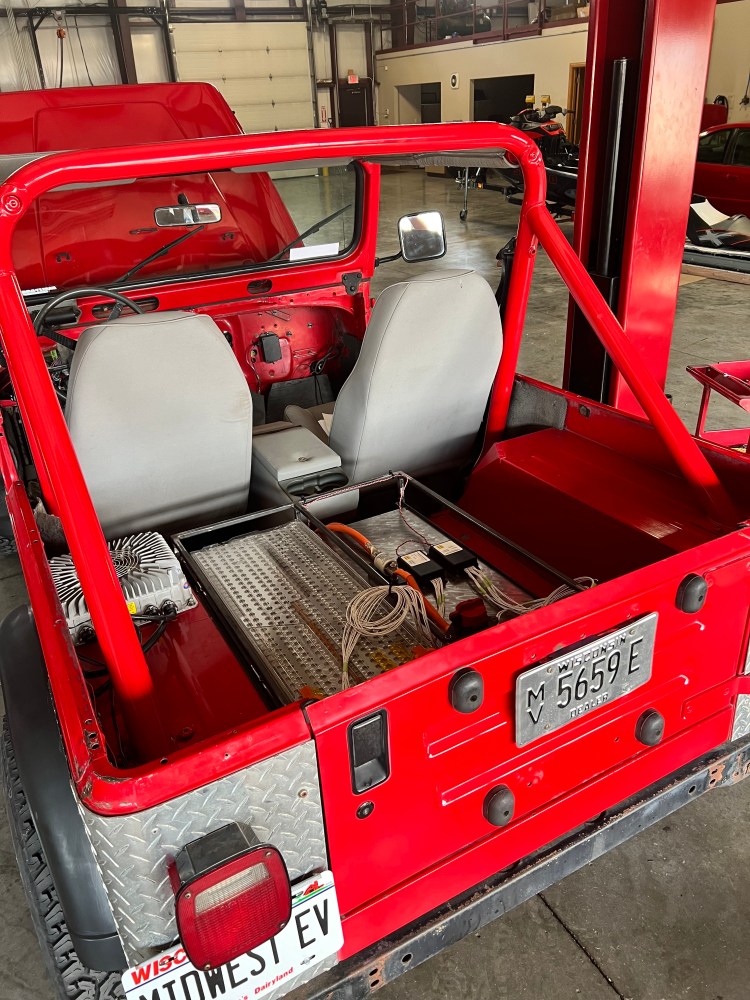

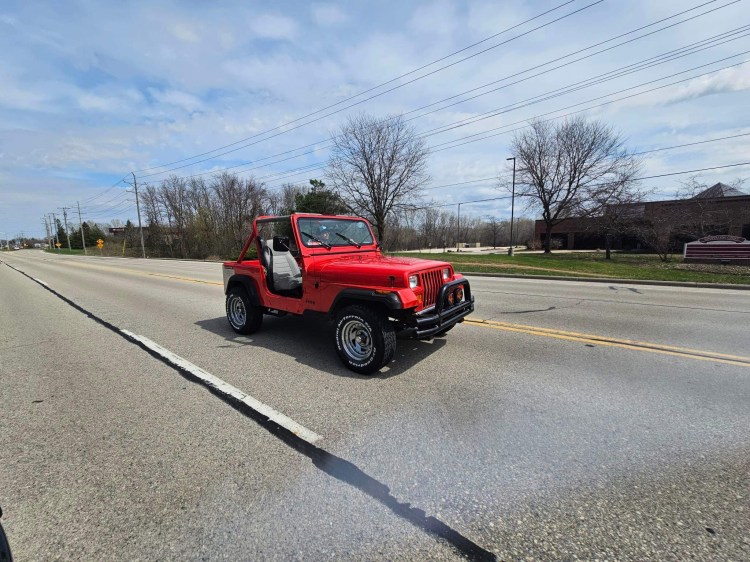
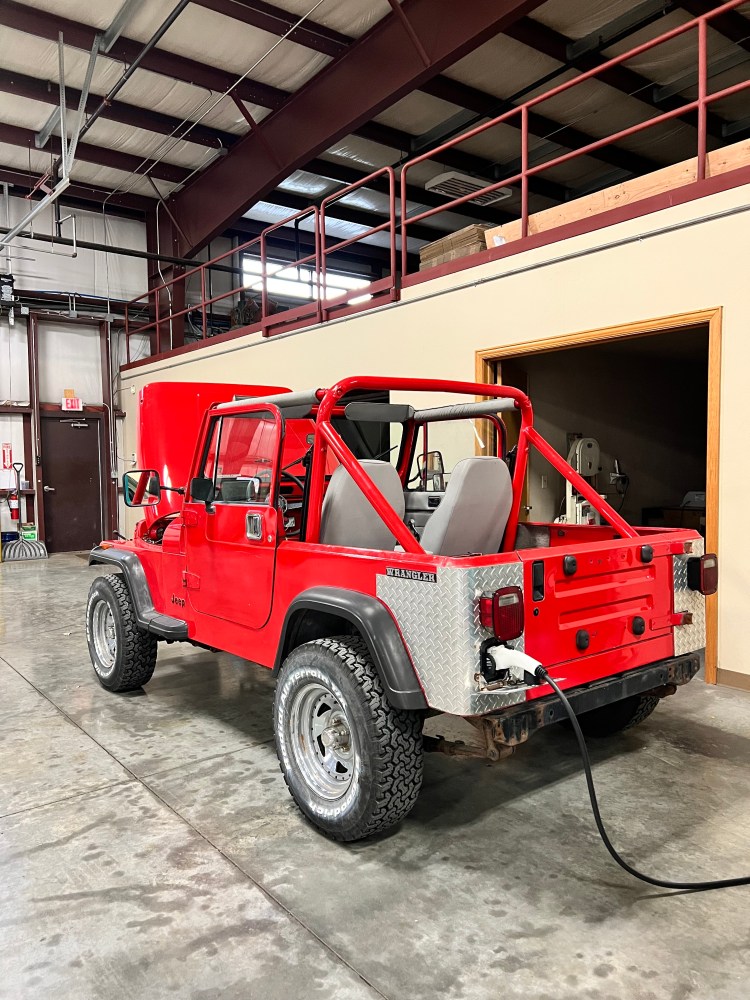

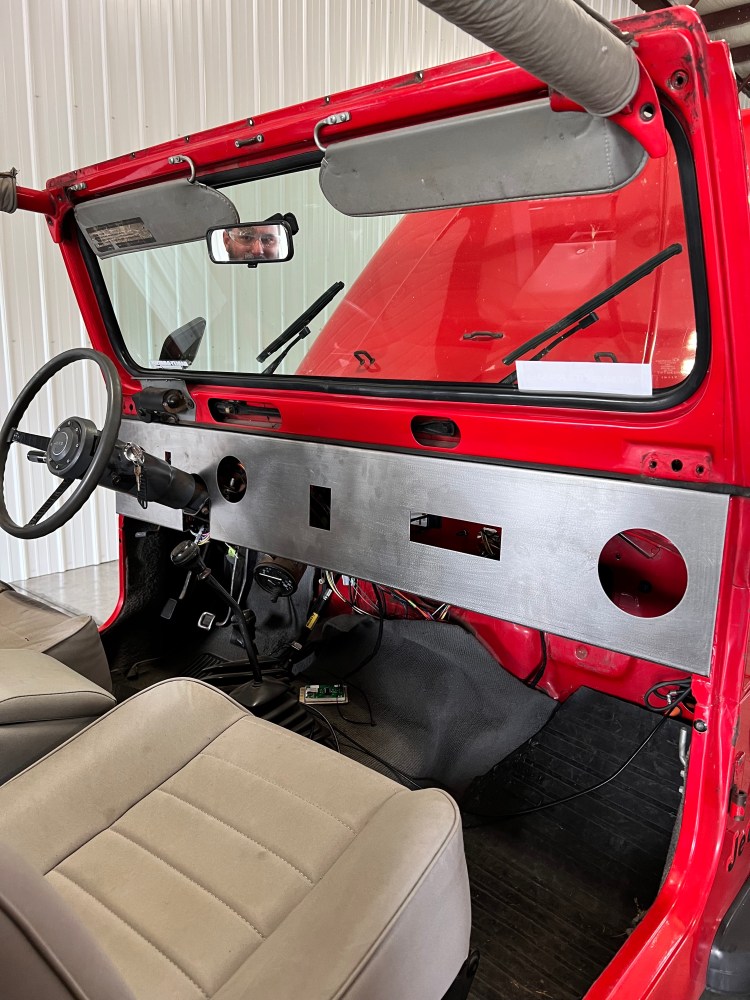
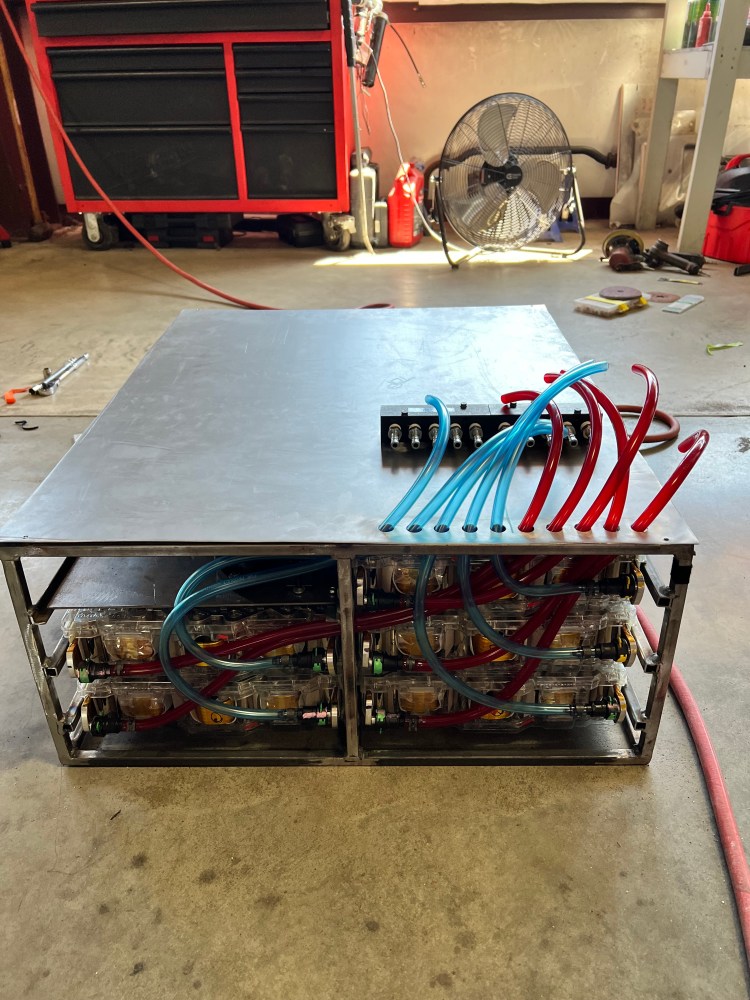
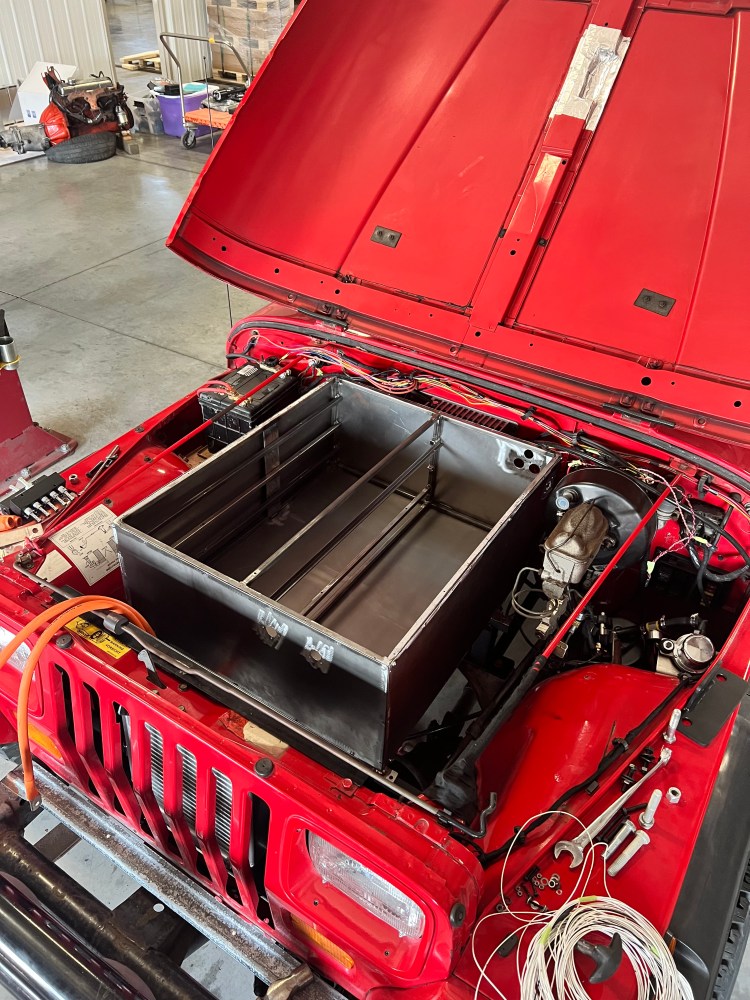
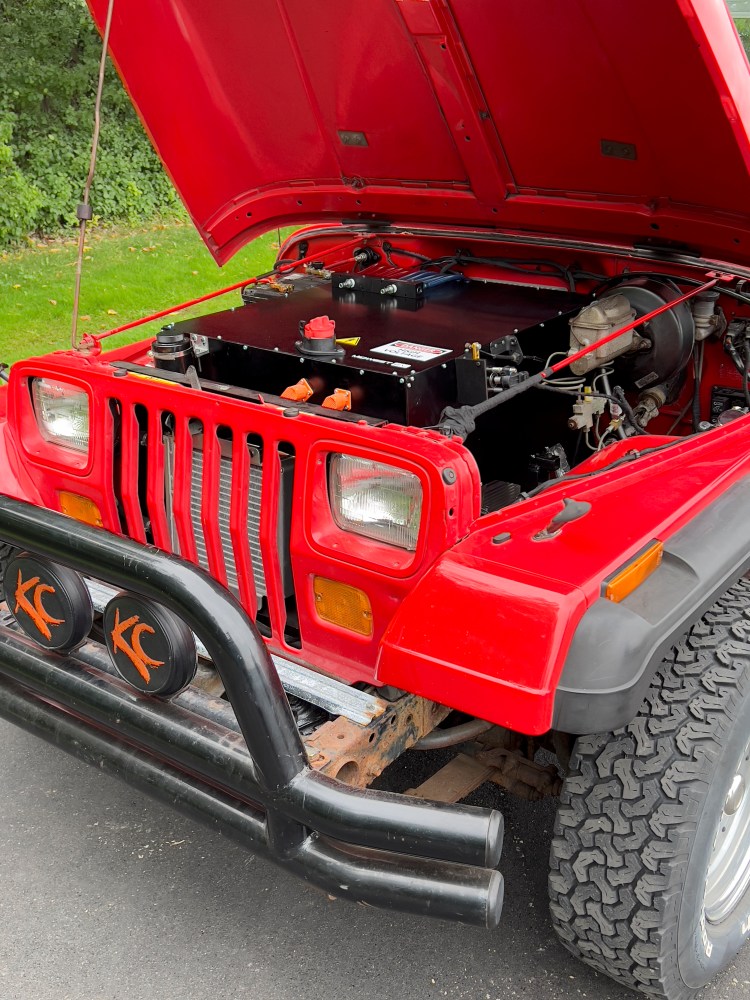
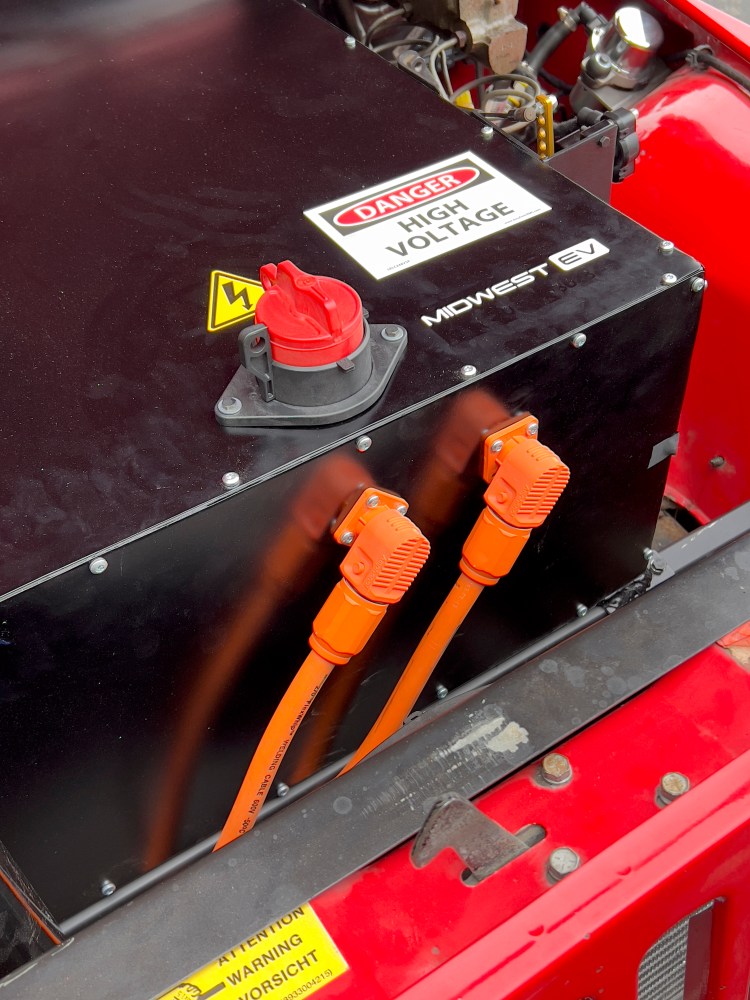

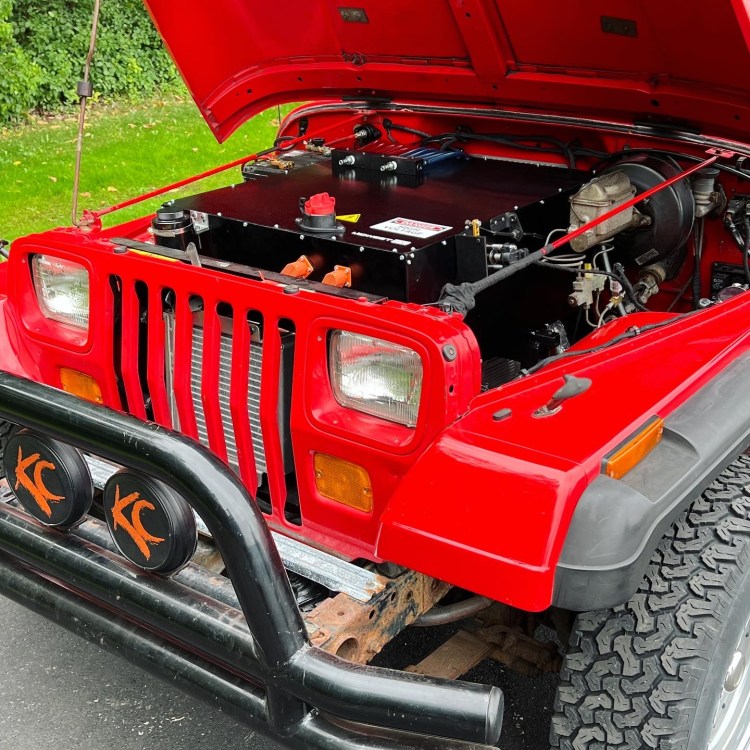



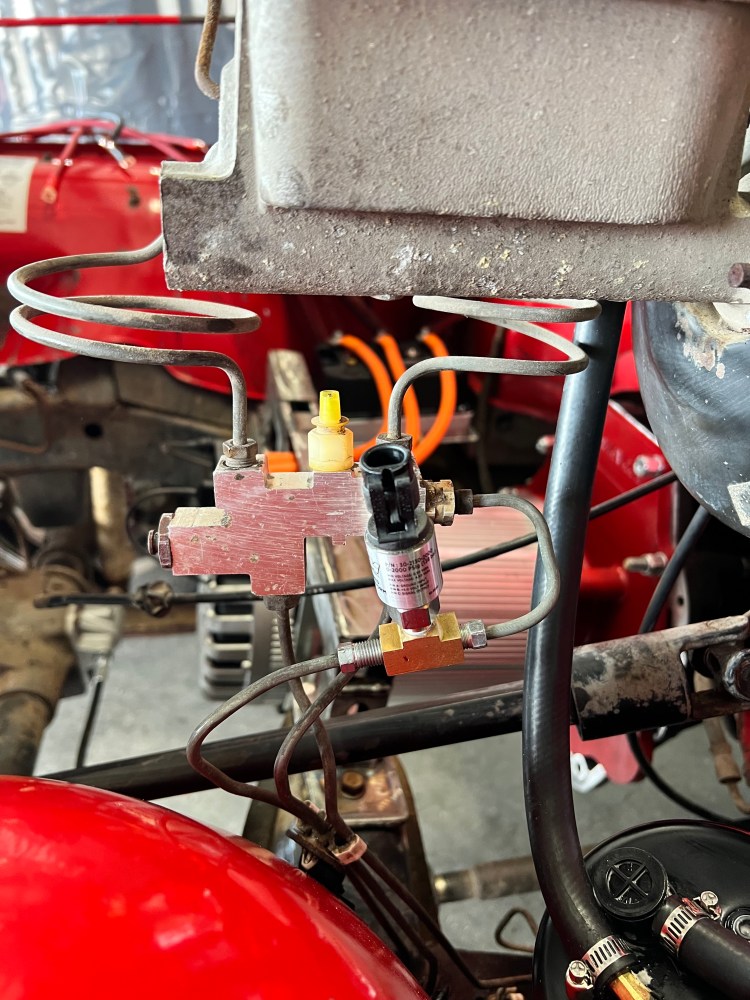
The Jeep conversion project helped Drew gain a better understanding of how important component placing is for ease of wiring. Programming an EV motor for the first time and understanding the Dilithium Battery Management System (BMS) was very beneficial to learn on the Jeep as well, and has helped Drew be more efficient on the projects he performed after, like the Autobianchi. “The BMS isn’t too complicated, but there is a lot of wiring and a lot of parameters to set inside of the master control unit. Now I know what to expect when tackling this phase of each EV conversion,” said Drew.
Challenges
The biggest challenge initially was fabrication. Mating the new EV motor to the transmission, we knew a custom coupler needed to be machined. The adapter plate was purchased through Legacy EV, and made by Canadian EV. This specific adapter plate is actually for a Chevy S10, but uses the same bell housing bolt pattern as the Jeep 4cyl manual transmission.
A universal coupler was used, it just needed to be machined to size. Drew modeled it in CAD first. From there, he decided to 3D print a prototype coupler to ensure it was correct. He wanted to verify the coupler was going to work with the customization. Once he was happy with the prototype, he sent the CAD file and universal coupler to Motion Products, our sister company, engineering department where they machined the coupler to size.
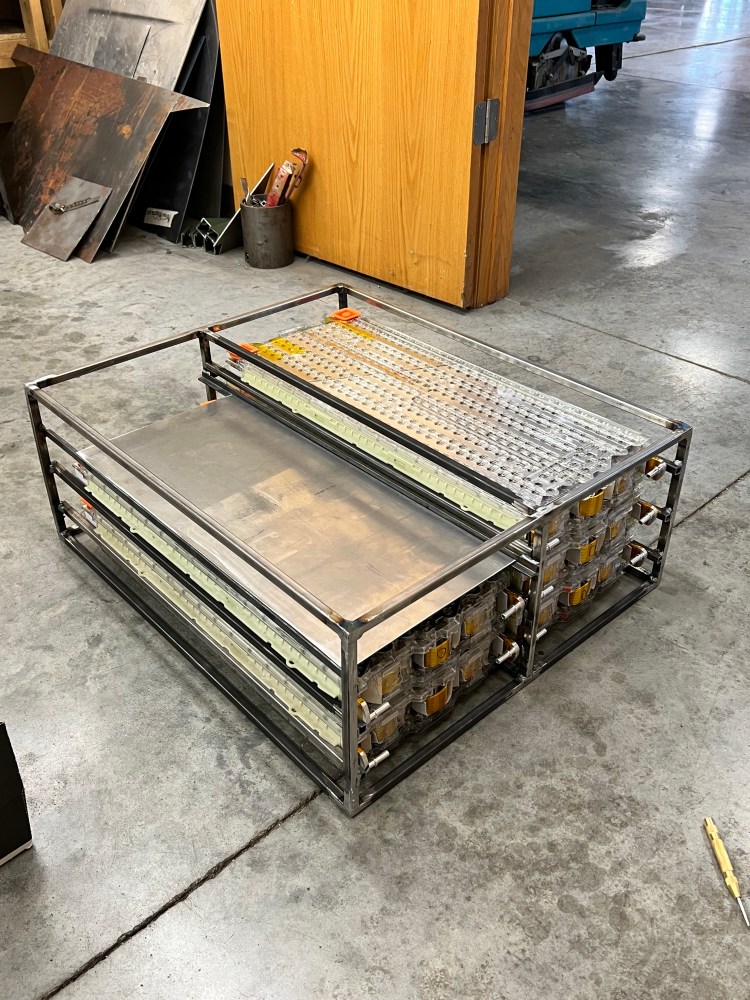
After the coupler was machined, fabrication of the motor mount, battery boxes, and mounting of the battery boxes needed to be done. The metal fabrication process took Drew longer than he expected. Prior to starting the Jeep project, Drew didn’t think that the metal fabrication process would be as intensive. He appreciates that he was able to go through the Jeep project beforehand, so he could truly learn the importance of this step in the process of converting a vehicle to an EV.
Depending on the EV conversion project, about 75% of the project could be metal fabrication. Between motor mounting and battery box fabrication and mounting, some projects are much more involved than the others. Projects that have custom requests also take more of a creative and thought-out approach in how we configure mounting of the motor and components. Drew also learned the importance of ease of wiring or service if needed. Easy access to components will help if the electric vehicle needs services or if parts need to be replaced or upgraded.
Another thing Drew realized that some might not consider is that an electric motor is a lot quieter than an internal combustion engine. Any little squeaks or rattles are going to be more apparent after a conversion since they won’t be drowned out by the sound of an internal combustion engine. Because of this, there may need to be additional services performed for example on the steering, suspension, or interior squeaks so that the car is up to par.
Jeep Motor & Components
The Jeep was converted from its original 2.5L 4cyl to a 100 volt Nominal Hyper 9 with an SME X1 Controller mated to the factory AX5 manual transmission still utilizing a clutch. Powering the Jeep is two packs of 5 Tesla Model S battery modules wired in parallel, creating a 53 Kilowatt hour battery bank with the dilithium battery management system. Drew used an Elcon DC-DC converter and a Thunderstruck Motors on-board charger with a J-1772 Charge Port. He also installed the Thunderstruck Motors MCU Display that shows state of charge percentage, current battery voltage, amperage leaving the battery pack and amperage being put back in during regenerative braking, battery temperature, and the average individual cell voltage. The Jeep has roughly 130 HP and 175 Ft/lbs of torque and ranges 130 miles on a full charge.
All in all, this conversion was a huge success and a great learning tool for us. We are looking forward to all of our unique conversion projects! Stay tuned for what internal projects take on in the future!
 Midwest EV